

A smoother solar panel installation starts with understanding your home before anyone sets foot on the roof. A clear plan can help you assess whether your property is suitable, understand what a survey needs to establish and prepare for the work.
If you’re wondering what happens when panels are installed, it’s natural to have questions. Roof condition, shade, available space and your home’s electrical setup can all shape the system design and schedule. Planning requirements may also depend on your property, so installation involves more than choosing a place for the panels.
This guide takes you through the main stages, from the first assessment and system design to installation day and handover. You’ll learn what to prepare, which property details can affect the plan and what happens after the panels are fitted. With a clearer picture of the process, you can discuss your home’s suitability with a local installer and make an informed decision.
Key Takeaways
- Understand the main stages of solar panel installation, from the first property assessment to system handover.
- Gather details about your roof and household electricity use to help shape a suitable system design.
- Learn how roof condition, orientation, shading and available space can influence the proposal.
- Know what to expect on installation day, including how access and system design can affect disruption.
- Explore a tailored solar assessment with Extract Energy, serving homes across Hampshire, West Sussex, East Sussex, Surrey, Wiltshire and Berkshire.
Solar panel installation: what the process involves for a UK home
Professional rooftop solar installation involves assessing the home, designing a fixed solar photovoltaic (PV) system and fitting it to generate electricity for household use. The panels connect to electrical equipment that converts their output into usable electricity. A system may also include battery storage, depending on the home and household’s priorities. Rooftop PV is different from a plug-in solar product, which is a separate, smaller type of setup rather than a roof-mounted system wired into a home’s electrical arrangements. The Photovoltaic system overview explains the main components and how they work together.
A well-planned solar panel installation is a sequence of decisions, not just a fitting date. The process typically moves through an initial assessment, a property survey, system design, any relevant permissions or connection requirements, installation, commissioning and handover. Commissioning involves checking and configuring the installed system. The design and schedule depend on the property and project.
Each stage answers a different practical question:
- Assessment: Could the home suit solar, and what information is needed to explore a system?
- Survey: How do the roof, access and electrical setup affect the proposed work?
- Design: Where could panels and related equipment go, and what system could suit the household?
- Preparation: Are any project-specific permissions or grid-connection steps relevant?
- Installation and handover: How will the equipment be fitted, checked and explained to the homeowner?
What happens between the first assessment and installation day?
The first assessment starts with useful context: the roof’s form and known condition, visible shading, household electricity use and what you want solar to help you do. A site survey can clarify practical details, including safe roof access, usable panel area, possible cable routes and the home’s electrical arrangements. These details help turn an initial idea into a design based on the property, rather than a generic layout.
Plans can change as the property is assessed. A roof with several slopes, obstacles or restricted access may need a different layout and preparation from a simple, open roof. The survey helps identify these considerations before fitting day, so the proposed work can reflect the actual roof and access arrangements.
Which decisions are specific to your home?
Roof layout, orientation, shading and usable space influence where panels could go and how the system is arranged. Household electricity use matters too: daytime demand may lead to different design considerations from a home that uses more electricity in the evening. If you can, share a recent view of your energy use and mention expected changes, such as a different household routine.
Battery storage is another option to consider, not an automatic part of every design. It can be included when it suits the project and household priorities. A tailored proposal brings these factors together and explains the reasoning behind the layout and what happens next.
Solar panel installation step by step: assessment, design and preparation
A little preparation can make the early decisions clearer. Before your solar panel installation reaches the fitting stage, the assessment and design process brings together information about your home, electricity use and what you want the system to do. You don’t need technical drawings or perfect records to begin. A few practical details can show what needs closer attention.
A solar system should be designed around the property’s roof, electrical setup and household needs, not selected from a one-size-fits-all template.
The process usually follows these steps:
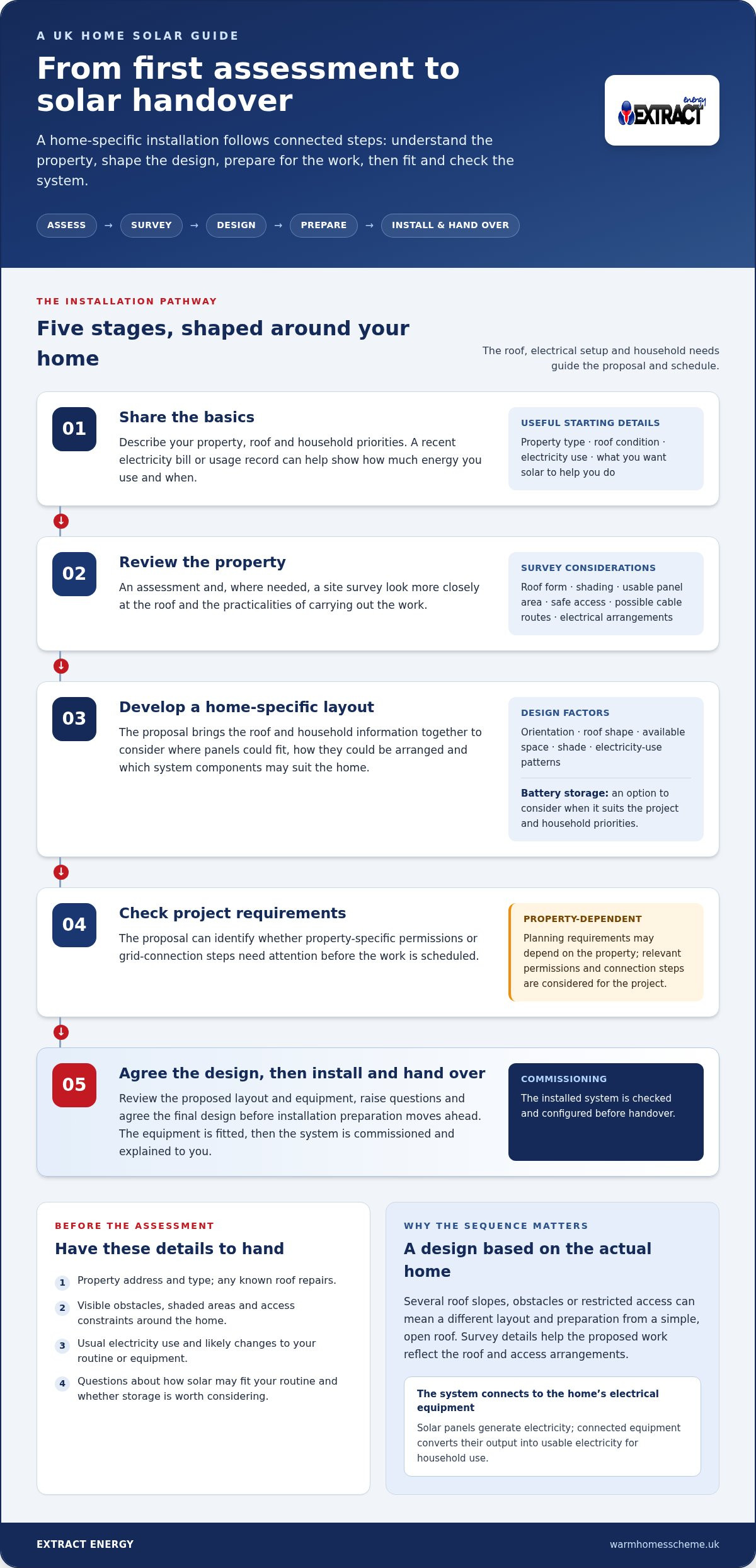
- Share the basics. Describe your property, roof and household priorities. A recent electricity bill or usage record can help show how much energy your household uses and when.
- Review the property. An assessment and, where needed, a site survey clarify roof form, access, shading, usable space and electrical considerations.
- Develop the layout. The design considers where panels could fit, how they can be arranged and what system components may suit the home.
- Consider project requirements. The proposal can identify whether property-specific permissions or grid-connection steps need attention before work is scheduled.
- Review and approve the design. Understand the proposed layout and equipment, raise questions and agree the final design before installation preparation moves ahead.
What should you prepare before a solar assessment?
Start with information you can access easily: the property address and type, any known roof repairs, visible obstacles or shaded areas, and any access constraints around the home. Note your household’s usual electricity use and likely changes, such as working from home or adding electrical equipment.
It also helps to write down what you want to understand, including how the system could fit your routine and whether battery storage is worth considering. The assessment can then focus on the details that need a closer look for your project.
How does a home-specific solar design take shape?
The design brings information about the roof and household together. Roof orientation, shape, usable space and shading help determine possible panel positions. The proposal also considers how the system connects with the home’s electrical arrangements and the household’s pattern of electricity use. If different roof areas have different levels of shade or space, that can influence which layout is suitable.
Battery storage can be considered as part of the design, but it isn’t an assumed requirement. The aim is to match the proposed system to the property and your priorities, then make the choices clear before you approve the plan. For a practical next step, discuss your home’s solar suitability with Extract Energy.
Roof suitability, planning and grid connection: what can affect installation?
A roof can look suitable from the ground and still need closer assessment. Its condition, usable area, orientation, shading and access all influence the design. Planning and electricity-network arrangements are separate considerations: one concerns where equipment may be installed, while the other concerns how the system connects to the local network.
These checks don’t automatically rule out a project. They help shape a proposal around the home and identify details to resolve before work is scheduled.
How do roof direction, shading and condition affect a proposal?
Panel layout depends on more than whether a roof faces south. East- and west-facing roof areas may also be considered, with the final design based on the particular property. Chimneys, trees and nearby buildings can cast shade at different times of day or across the year. A survey considers where and when shading may affect usable panel space.
The roof’s condition matters too. An assessment considers its form and surface, installation requirements, access and possible equipment locations. If a roof has several slopes or obstacles, the layout may need to work around them. The proposed arrangement should reflect the roof as it is, rather than assume every usable-looking section can take panels.
When might planning or grid arrangements need attention?
In England, many domestic roof installations fall under permitted development, but not every property or design is automatically covered. Rules and conditions can depend on the building and its location. Listed buildings, conservation areas and other designated settings may need particular checks. For example, listed buildings can require planning permission and/or listed building consent. Planning guidance also sets limits for roof-mounted panels, so the proposed position and projection matter.
Planning permission is different from building regulations. Planning concerns whether a development is allowed in that location; building regulations cover matters such as structural and electrical safety. A project needs to account for relevant requirements even where planning permission isn’t needed. Rules can differ across the UK, so check current guidance for the home’s nation and any property-specific restrictions before proceeding.
The electricity network also plays a part. A Distribution Network Operator (DNO) manages the local electricity distribution network. The system’s connection and any electricity exported to the grid may involve network requirements. The relevant arrangements depend on the project’s technical details and the local network, so they should be considered during installation planning rather than assumed to be identical for every home.
For a solar panel installation, roof suitability, planning and grid connection are related checks, but they answer different questions. A clear assessment brings them together and highlights what needs attention for the property. As UK guidance and project requirements can change, confirm the current rules and technical arrangements before finalising the design or schedule.
What to expect during solar panel installation and system handover
Once the design and preparations are agreed, installation day follows a practical sequence. The team needs suitable access to the work areas, including the roof and the parts of the home where electrical equipment will be fitted. Work can take place both outside and inside, depending on the property and system design.
The main stages are usually:
- Prepare access: Set up the agreed access arrangements and protect the areas needed for the work.
- Fit the mounting equipment: Secure the mounting components to the roof in the planned positions.
- Install the panels and system equipment: Fit the panels and connect them with the associated electrical components.
- Complete electrical work and checks: Make the required connections and carry out checks on the installed system.
- Commission and hand over: Configure the system and explain its operation, relevant documents and any included monitoring.
Commissioning checks and configures the installed system so its components can operate together as intended, subject to the technical checks specified for the project. It is a distinct stage, not simply the moment the panels are physically in place.
How can you prepare the household for installation day?
Before the team arrives, keep agreed access routes clear and mention practical constraints, such as a locked side gate or a room that needs to remain accessible. If work is planned near an electrical cupboard or another indoor area, consider how the household will manage around it. Don’t move equipment or change the home’s setup unless this has been discussed as part of the project.
Keep your questions to hand. You might want to know which areas will be used, what household activity could be affected and who to speak to if plans need clarification. Installation duration and disruption vary with the roof, access and system design, so don’t rely on one fixed timeframe for every home.
What should system handover explain?
At handover, you should be shown the basics of using the system and told where to find its key information. This can include the system layout, relevant equipment details and guidance for normal operation. Ask for unfamiliar terms to be explained in plain language, and make sure you know which documents relate to your installation.
If monitoring is included in the project, the handover should show you how to access it and what information it displays. Monitoring can help you view system information, but its features depend on the equipment and setup selected. Use the handover to clarify what the readings mean and where to find support information later.
A clear handover leaves you knowing how the system is set up and where its documentation is kept. To discuss the practical requirements for your property, plan your solar installation with Extract Energy.
Plan your solar panel installation with local, end-to-end support
Once you understand the stages, consider how they apply to your property. A home assessment turns general questions into practical ones: what the roof can accommodate, how a proposed system could fit your household and what project requirements need attention before installation is planned. You don’t need to have every decision made in advance. The assessment is a starting point for discussing what may suit your home.
What does a supported installation journey help simplify?
Assessment, system supply and installation are connected parts of the same project. Information gathered about the property informs the design; the agreed design then guides which equipment is supplied and how the work is prepared. Keeping those stages connected helps you understand how early decisions relate to the installation itself.
Extract Energy assesses, supplies and installs residential solar PV systems, with battery storage available as part of the system where it suits the project. The proposal is shaped around the home rather than assuming every household needs the same layout or equipment. Use the assessment to talk through your priorities and understand the practical considerations specific to your property.
How can a local homeowner take the next step?
Extract Energy works with homeowners across Hampshire, West Sussex, East Sussex, Surrey, Wiltshire and Berkshire. If your home is in one of these areas, begin by arranging an assessment for the property. Sharing your address, known roof details and a broad picture of your household’s electricity use can help start a focused conversation. If you’re unsure about a detail, raise it as a question rather than trying to assess the roof yourself.
Before the discussion, think about what you want to understand: whether your home may be suitable, which parts of the property affect the design and what the next project stages involve. This keeps the conversation centred on useful information and lets you review a proposal before making decisions.
A clear route forward begins with the home itself. Discuss your property and arrange a solar assessment with Extract Energy when you’re ready to explore the options. The assessment can establish what a tailored system could involve and which steps would follow, giving you a practical basis for deciding how to proceed.
Take the next step towards a solar-ready home
You don’t need to have every technical decision settled before exploring solar. Start with the questions that matter to your household: what you’d like a system to support, how your routines may change and what you want clarified about your property. A focused assessment can turn those questions into a practical conversation about the next steps for your home.
A well-planned solar panel installation begins with understanding the home, not rushing towards a fitting date. Take time to discuss your priorities and review the proposed approach so you can decide what feels right.
Arrange a solar panel assessment for your home with Extract Energy to explore your options. The assessment considers your home on its own merits and gives you a clear starting point for deciding how to proceed.
Frequently Asked Questions
Do I need planning permission to install solar panels on my home in England?
Usually, rooftop solar panels on a home in England fall under permitted development, so a planning application may not be needed. Exceptions and conditions can apply, particularly to listed buildings and properties in conservation areas. The design must also meet the relevant limits for its position and projection. Check the rules for your property before work begins, and remember that planning permission and building regulations are separate matters.
How long does solar panel installation take?
There isn’t one fixed timescale for every solar panel installation. The work can depend on the roof layout, system size and design, access arrangements and any additional electrical work. A complex roof or restricted access, for example, may need different preparation from a straightforward installation. The property assessment and proposed design help establish a project-specific schedule, including any arrangements that could affect the planned date.
Can solar panels be installed on a flat roof?
Yes, solar panels can be installed on a flat roof. The system layout and mounting approach need to suit the roof and property, including available space and shading. Planning conditions may apply to the panels’ height and projection, so check a flat-roof design against current rules rather than assuming it is automatically permitted. A property assessment can establish whether the roof is appropriate for the proposed system.
Can I stay at home while solar panels are being installed?
In many cases, you can remain at home during installation, but expect some activity around the property. Work may involve roof access, equipment being brought in and electrical work inside the home. Noise or temporary restrictions around work areas are possible. Before installation day, clarify which parts of the property need to be accessible and whether planned electrical work could briefly affect household routines.
Does my electricity supplier need to approve a solar panel installation?
Your electricity supplier doesn’t usually approve the physical installation. The local Distribution Network Operator (DNO), which manages the electricity distribution network, is the relevant organisation for network connection arrangements. Requirements can depend on the system’s technical details and location. For homes across Hampshire, West Sussex, East Sussex, Surrey, Wiltshire and Berkshire, the relevant DNO depends on the property’s address. Exporting electricity may also involve a separate arrangement with a supplier.
Can solar panels generate electricity on a cloudy day?
Yes, solar panels can generate electricity in cloudy weather because daylight still reaches them. Output is generally lower than in stronger direct sunlight and can vary with cloud cover, the season and the system’s design. Generation won’t necessarily stop when the sky is overcast. If monitoring is included, use its information to view system performance and compare readings over time rather than judging output from one cloudy day.
Can I get paid for electricity my solar panels export to the grid?
Yes, you may be paid for surplus electricity exported to the grid through the Smart Export Guarantee (SEG). Participating suppliers set their own rates and terms, so payments vary. To qualify for SEG, the installation must be carried out by a certified installer, such as Extract Energy. You’ll also need an export meter and an SEG arrangement with a supplier. Check the current tariff terms, including how export readings are recorded, before choosing an option.

