

Could loft insulation that’s been in place for decades still be doing its job? It might. How long does loft insulation last? Age alone won’t tell you whether it needs replacing. The material, how it was installed and what’s happened in the loft all affect its condition.
It’s understandable to worry about hidden damp, damage or an unnecessary replacement bill. In many cases, insulation needs an inspection or a targeted improvement rather than complete renewal. What matters is whether it remains dry, uncompressed and properly fitted.
This guide explains what affects insulation lifespan and which warning signs to look for, including damp patches, flattened areas, discolouration and pest activity. You’ll also find practical ways to protect its performance, such as keeping ventilation routes clear and avoiding pressure from stored items. If your insulation is damaged, unsuitable or no longer performing well, new mineral wool or quilt insulation can be a practical next step.
Key Takeaways
- How long does loft insulation last? There’s no fixed expiry date. Treat lifespan estimates as guides and consider the material, installation and current condition.
- Look over accessible areas for changes in coverage or signs of moisture, and arrange a closer assessment if anything looks concerning.
- Protect insulation by preserving its coverage and addressing leaks or damp before deciding whether affected material needs replacing.
- Age alone doesn’t mean replacement is necessary. Renewal may be worth considering if insulation is damaged, persistently damp or no longer suitable.
How long does loft insulation last in a typical UK home?
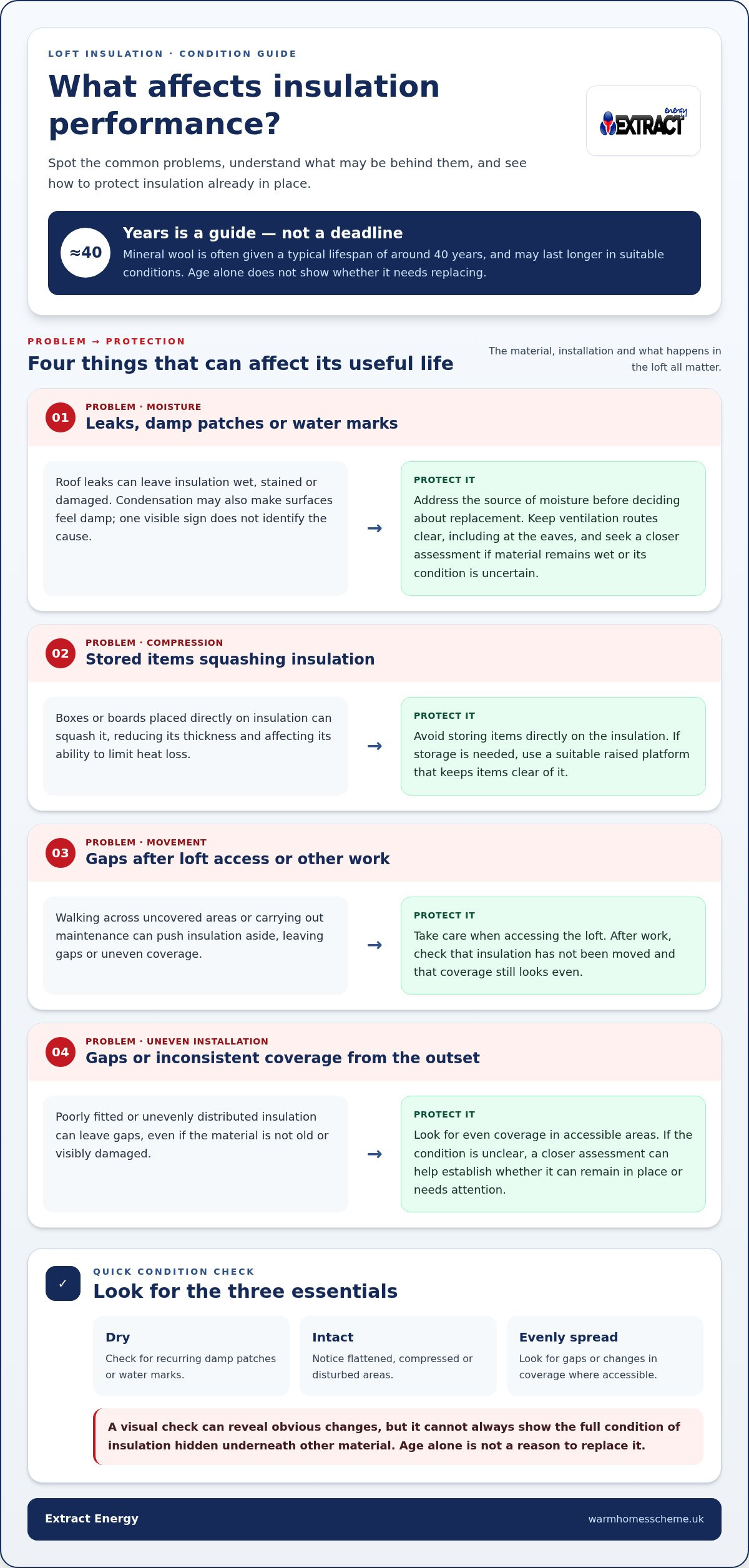
There’s no single replacement age that applies to every loft. As a broad guide, mineral wool insulation is often given a typical lifespan of around 40 years, and it may last longer in suitable conditions. That’s an estimate, not a deadline. So, how long does loft insulation last in your home? It depends on the material, the installation and its condition now.
To make a useful estimate, distinguish how long the material remains in place from how well it continues to limit heat loss. Insulation that stays dry, intact and evenly spread may remain useful beyond a commonly quoted estimate. By contrast, a newer installation may perform less well if it has been disturbed or affected by moisture. Age alone doesn’t prove it has stopped working.
What does ‘lasting’ mean for loft insulation?
Insulation can still be physically present without providing consistent coverage. Gaps, movement or compression may reduce its ability to slow heat escaping through the roof, while moisture can affect its condition. In practice, “lasting” means both that the material remains sound and that it is still positioned to do its job. These don’t always have the same timeline.
This distinction helps avoid unnecessary replacement. An older installation may still be serviceable, while a more recent one may need attention if it has become damp, shifted out of place or been squashed under stored belongings. A visual check can identify obvious changes, but it won’t always reveal the full condition of insulation hidden beneath other material.
Do different loft insulation materials last for different lengths of time?
Yes. Materials can differ in expected service life, and the way they’re fitted and cared for matters too. Mineral wool, commonly supplied as quilt, is a familiar choice for lofts. Published estimates for mineral wool vary; a typical figure of around 40 years is a guide, not a promise for every installation. Use estimates as context, not as the sole reason to replace insulation.
Quilt describes the form of insulation, rather than giving a lifespan on its own. Its material, condition and installation all matter. General references such as Insulation types and properties explain how insulating materials differ, but an overview can’t determine the remaining life of insulation in a particular loft.
When assessing existing insulation, focus on what you can observe rather than trying to date it precisely. Useful clues include whether it appears dry, whether coverage looks even and whether it has been compressed or disturbed. If its condition is unclear, a closer assessment can help establish whether it can remain in place, needs attention or is unsuitable for the home’s needs. Extract Energy installs mineral wool and quilt loft insulation for homeowners across Hampshire, West Sussex, East Sussex, Surrey, Wiltshire and Berkshire.
What affects how long loft insulation stays effective?
Insulation performance depends on more than age. Moisture, installation quality and activity in the loft can all affect its condition and coverage. If you’re wondering how long does loft insulation last, consider these factors alongside the material itself. A change in household comfort or energy use may also reflect different heating habits or home improvements, rather than deterioration of the insulation.
How can damp, leaks and ventilation affect insulation?
Water from a roof leak can leave insulation wet, stained or damaged, and damp material may not perform as intended. Condensation can also make surfaces or insulation feel damp, but it doesn’t identify the cause by itself. Changes in ventilation, moisture from inside the home or a leak may all need consideration. Look for recurring damp patches or water marks rather than assuming one visible sign explains the problem.
Deal with the source of moisture before deciding whether insulation needs replacing. Otherwise, new or retained material could be affected again. Keep loft ventilation routes clear, including at the eaves, and watch for signs of damp returning after the underlying issue has been addressed. If insulation remains wet or its condition is uncertain, arrange a closer assessment before disturbing it.
Can storage and loft access shorten insulation’s useful life?
Yes. Placing boxes or boards directly on insulation can squash it, reducing its thickness and affecting its ability to limit heat loss. Walking across uncovered areas or carrying out later work can also push material aside, leaving gaps in the coverage. The insulation may not be visibly damaged, but its position and shape can still affect how well it performs.
Use the loft carefully. Avoid storing items directly on insulation, and take care not to compress or displace it when accessing the space. If you need regular storage, plan for a suitable raised platform that keeps stored items clear of the insulation, rather than laying boards straight over it. After work in the loft, check that material hasn’t been moved and that coverage remains even.
Installation quality matters too. Poorly fitted or unevenly distributed insulation can leave gaps from the outset, while later maintenance, wiring or other loft activity may disturb it. Changes to the home can alter its heating needs as well: an extension, a new room layout or different use of the loft may affect comfort without proving the insulation has physically failed. Consider the insulation’s condition and the home’s current needs separately. If existing material is damaged or no longer suitable, loft insulation support may help you consider a practical next step.
How can you tell whether your loft insulation needs attention?
A careful look can help you spot areas that deserve attention, but it can’t confirm exactly how well insulation is performing. If you’re asking how long does loft insulation last, its visible condition is more useful than age alone. Check only areas you can see safely. Don’t climb into an unsafe roof space, step between ceiling joists or move insulation to inspect what’s underneath.
Use this simple sequence from a safe, accessible position:
- Review the visible coverage. Look for areas where insulation appears to be missing, uneven or pushed aside.
- Notice changes in its appearance. Check for flattened sections, discolouration or material that looks damaged.
- Look for signs of moisture. Water marks, damp patches or visible condensation nearby are reasons to investigate further.
Which visible signs suggest loft insulation may have deteriorated?
Gaps can leave parts of the ceiling less covered, whilst flattened material may have been compressed by storage or foot traffic. Insulation that has shifted could leave exposed areas, and staining may indicate water exposure. Note where you see each issue, such as beside the eaves or below a roof section. One sign alone can’t establish the cause or tell you what remedy is needed.
Don’t pull material apart or handle anything that may be damp, contaminated or difficult to identify. A limited view can also hide changes beneath the top layer. If you can’t see the full area safely, note what’s visible and leave further investigation until it can be assessed appropriately.
When is a closer assessment more useful than guessing?
Arrange a closer assessment if insulation is wet, significantly disturbed or hard to identify, or if visible sections suggest a wider issue. A visual check may miss hidden moisture, gaps beneath the surface or problems in parts of the loft you can’t safely reach. This is especially relevant if you don’t know what material was installed or whether earlier work altered its coverage.
Keep your notes factual: describe the location and what you observed, rather than deciding that the insulation has failed. A damp patch, for example, flags an issue to investigate but doesn’t by itself identify its source or prove the insulation needs replacing. Condition and suitability matter more than a guessed installation date.
There’s no need to disturb material to make the check more thorough. If access is unsafe, the insulation is unclear or the visible signs concern you, leave it in place and arrange a proper assessment. This can help distinguish an isolated patch of damage from a broader problem and avoid replacing insulation based on appearance or age alone.
How can you help loft insulation last longer?
Good care won’t guarantee a particular lifespan, but it can help insulation remain in suitable condition. Keep moisture out, avoid compressing or shifting the material, and make a note of changes in the loft. These habits also help you judge how long does loft insulation last in your home, rather than relying on a general estimate.
What routine checks are sensible?
Check visible areas occasionally if you can access the loft safely. Look again after a roof leak, building work or a change in how you use the space. You don’t need to handle or move the insulation. If an area is wet, hidden from view or unsafe to reach, leave it alone and arrange a suitable assessment.
- Notice whether visible coverage has shifted or been compressed.
- Look for signs of water exposure or damp near the insulation.
- Pay extra attention to areas affected by a leak or later work.
- Record what you see and where, without disturbing the material.
These checks help you spot changes, not diagnose their cause or measure insulation performance. A quick note such as “damp mark below the roof slope” is more useful than assuming the insulation itself is the source of a problem.
How should you use the loft without damaging insulation?
Stored belongings can squash insulation if they rest directly on it. Avoid placing boxes or boards on top of the material, and take care that access or later work doesn’t push it aside. If the loft is used for storage, arrange items and access routes so they don’t compress or displace the insulation.
Don’t try to move insulation or alter ventilation routes as a routine maintenance task. If storage changes have disturbed coverage, or you can’t reach an area safely, get advice before attempting to put things right. This helps avoid creating gaps or causing further disturbance.
Moisture needs attention before replacement. If a leak or damp is affecting the loft, address the source first; otherwise, insulation could be affected again. Once the cause has been dealt with, the material’s condition can be assessed to decide whether it can remain or needs attention. Replacing insulation without resolving the moisture issue may not address the underlying problem.
Keep a simple record of installation details if you have them, along with any roof leaks, repairs, building work or changes to loft storage. Dates, locations and brief notes can help make a future assessment more useful. If you don’t know the insulation’s age or type, record that too. The aim is to preserve coverage and spot issues early, not to chase a fixed lifespan.
If insulation is damaged or unsuitable, explore loft insulation options as a practical next step.
When should you consider new loft insulation?
New insulation may be worth considering if the existing material is damaged, persistently damp, badly disturbed or no longer suitable for the home. But an old installation doesn’t automatically need replacing. The right decision depends on its condition and whether it still provides suitable coverage, not simply on the year it was fitted.
Before arranging renewal, separate the insulation problem from its possible cause. If a roof leak has made material wet, the leak needs attention first. Replacing insulation without addressing the source of moisture could leave new material exposed to the same issue. Once the cause has been dealt with, the affected area can be assessed to decide whether it can remain, needs attention or is best renewed.
Repair, top up or replace: what is the difference?
The appropriate option depends on the cause and extent of the problem, as well as the material already in place. A localised issue may call for a different response from widespread damage or unsuitable insulation. Adding material isn’t automatically the answer, particularly if the existing layer is damp or uneven. Consider the roof space and current installation before deciding what work makes sense.
These options address different needs:
- Address the cause: deal with a leak or moisture issue before work on affected insulation.
- Restore coverage: consider whether displaced or disturbed material can be dealt with appropriately.
- Renew insulation: consider replacement when material is damaged, persistently damp or no longer suitable.
This isn’t a diagnosis. If the condition or cause isn’t clear, a closer assessment can help avoid choosing work based on age or appearance alone.
What to expect from a professional loft insulation installation
A professional installation starts with understanding the home’s needs and the existing loft arrangement. The suitable approach can then be planned before insulation is supplied and installed. Extract Energy supplies and installs mineral wool and quilt loft insulation for UK homes to reduce heat loss through the roof and improve home energy efficiency. The right arrangement depends on the property and existing conditions.
If your insulation is damaged, unsuitable or due for renewal, a professional installation can be a practical next step. Extract Energy supplies and installs loft insulation for homeowners in Hampshire, West Sussex, East Sussex, Surrey, Wiltshire and Berkshire. Explore loft insulation support.
Take the next step towards a more comfortable home
If you’re still unsure how long does loft insulation last in your home, focus on making an informed decision rather than working to an assumed expiry date. A clear understanding of the loft’s condition can help you plan sensibly, whether that means keeping the insulation in place or considering an update.
Extract Energy supplies and installs mineral wool and quilt loft insulation for homes across Hampshire, West Sussex, East Sussex, Surrey, Wiltshire and Berkshire. If new insulation looks like the right next step, explore the service and consider what may suit your home.
Explore loft insulation with Extract Energy and take a practical step towards improving your home’s energy efficiency.
Frequently Asked Questions
How many years does loft insulation usually last?
There’s no fixed lifespan for every loft. Mineral wool insulation is often given a typical estimate of around 40 years, but the actual service life depends on its condition, installation and exposure to moisture or disturbance. If you’re asking how long does loft insulation last, treat that figure as a guide, not a replacement deadline. Insulation that remains dry and in good condition may continue to be useful beyond it.
Does loft insulation need replacing after 20 years?
No. Reaching 20 years doesn’t automatically mean loft insulation needs replacing. If it still looks dry, evenly laid and undamaged, age alone isn’t a reason to remove it. Consider whether the home’s needs have changed, too. For example, you might be planning to use the loft differently or updating the property. If you’re unsure what material is present or whether it’s suitable, an assessment can help clarify the next step.
Can loft insulation lose its effectiveness over time?
Yes. Insulation can work less effectively if it’s compressed, shifted or affected by damp, even if it’s still visible in the loft. A colder room or change in heating use may prompt a check, but it doesn’t prove the insulation is the cause. Look for a pattern: does the problem affect rooms beneath a particular roof area, or did it begin after building work or a leak?
How do I know if my loft insulation is still good?
Visible insulation is more reassuring if it looks dry, evenly spread and free from obvious damage, but appearance can’t confirm performance throughout the loft. If you have paperwork from earlier work, check for the material type and installation date; these details can help make a later assessment more useful. Don’t climb into an unsafe space or lift material to investigate. Arrange an assessment if the area is inaccessible or you spot a concern.
Does wet loft insulation need to be replaced?
Not necessarily, but wet insulation needs attention and shouldn’t simply be covered with another layer. First, establish and address the source of moisture, such as a roof leak. The right decision then depends on how much material is affected and its condition once assessed. Avoid handling it if it’s difficult to reach or its condition is uncertain. Replacing material without resolving the cause risks leaving the underlying problem in place.
Can you put new loft insulation over old insulation?
Sometimes, but it depends on the existing layer. An installer needs to consider whether it’s dry, sound, evenly placed and suitable to keep beneath additional insulation. A top-up may be inappropriate if the old material is damp, damaged or badly disturbed. The loft’s layout and ventilation also matter. Don’t lay new insulation over a problem just to hide it; assess the existing installation before deciding.
What is the best way to make loft insulation last longer?
Keep the loft dry, avoid compressing insulation with stored items and check for changes after a leak or building work. Note installation details and any later repairs so you have a clearer record of what’s happened. For homeowners in Hampshire, West Sussex, East Sussex, Surrey, Wiltshire and Berkshire, Extract Energy supplies and installs mineral wool and quilt loft insulation as part of its home energy-efficiency work.


